
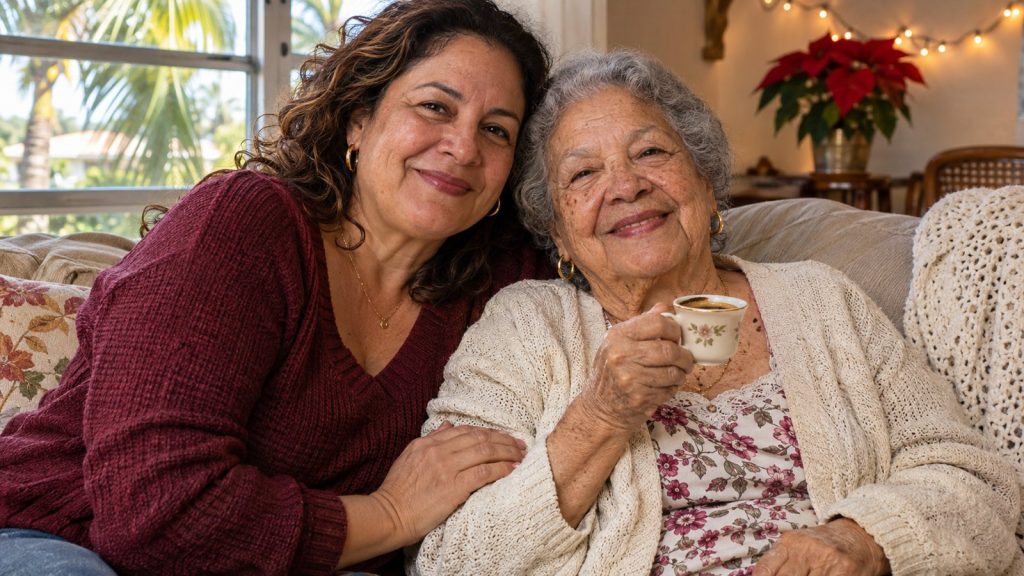
Holiday loneliness in seniors is easy to miss. Your mother says she's fine on the phone. Your father says he doesn't want a fuss. But the weeks between Thanksgiving and New Year's can be the emptiest of the year for an older adult who lives alone, especially after losing a spouse or when family lives out of state. If you're keeping an eye on a parent, here's what to watch for and how to help.
Why the holidays hit older adults harder
For most of the year, an older adult's week has a shape to it. A standing lunch with a friend, a church group, a doctor visit, the neighbor who stops by. In late November a lot of that pauses. Groups take a break, friends travel to see their own grandchildren, and the phone rings less.
Then come the reminders. The first Christmas without a husband or wife. A Nochebuena table that used to seat twelve and now seats two. Holiday music on the radio that brings back a whole life in another country. For many of our patients, family is spread between Florida, New Jersey and Latin America, and a video call on the 24th is the closest they'll get.
Plenty of seniors love a quiet December. That's their choice. What matters is whether your parent wants the quiet or has been left with it because their usual connections have dropped away.
Signs your parent may be lonely or depressed
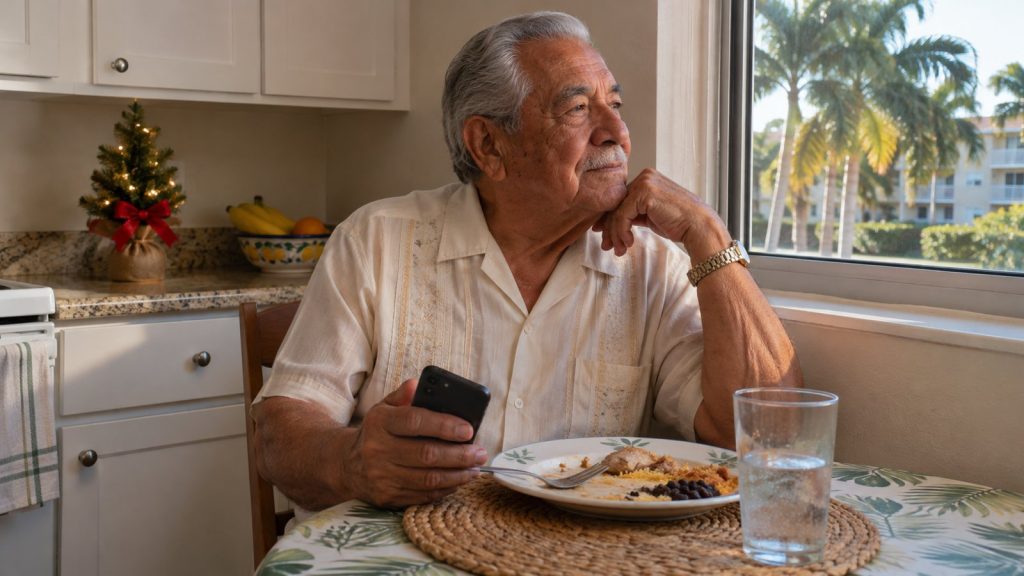
Older adults rarely say "I'm lonely." It tends to come out sideways. Watch for changes from what's normal for your parent:
- Calls get shorter, or they stop picking up when they usually would.
- Eating changes. The fridge is empty, or full of food that's going bad. Weight drops.
- Sleep changes. Sleeping much later, napping all afternoon, or awake at 3 a.m.
- They skip things they used to enjoy, like Sunday Mass, the domino game, their telenovela.
- Medications slip. Pill organizers that haven't been touched, or refills that weren't picked up.
- More aches and pains. In many older adults, low mood shows up as headaches, back pain or tiredness rather than sadness.
One of these on its own may mean nothing. Several together, lasting more than two weeks, is worth a conversation and a doctor visit.
Why loneliness is a health issue
It's tempting to treat loneliness as a mood that will pass in January. The research says otherwise. The CDC and the National Academies have linked long-term social isolation in older adults to higher risks of heart disease, stroke, depression and dementia.
It also affects the everyday things that keep a senior healthy. People who feel alone are more likely to skip meals, skip medications and skip appointments. Someone managing diabetes or high blood pressure can lose ground fast that way.
Depression in older adults is common, but it is not a normal part of aging, and it is treatable. Grief after a loss is normal too. When it doesn't ease over time, or when it starts to crowd out meals and sleep, that is the point to involve a doctor.
Practical ways families can help this season

You don't need a big plan. Small, regular contact matters more than one big visit.
- Set a call schedule. A short call at the same time every day is better than an hour once a week. Split the days among siblings and grandchildren.
- Give them a job. Ask for the flan recipe, ask them to make the pasteles, ask them to teach a grandchild a song. Feeling needed helps.
- Plan beyond the holiday itself. January is often harder than December, once the visitors leave. Put a few dates on the calendar now.
- Solve the ride problem. Many seniors stay home because they no longer drive. Read our guide to rides to doctor appointments for seniors for options in Palm Beach County.
- Look for something weekly. A church group, a senior center, a domino table, a walking group. Something with the same faces each week.
When to bring it up with the doctor

If you've noticed several of the signs above for more than two weeks, book a visit with your parent's primary care doctor. Low mood, poor sleep and weight loss can have physical causes too, like thyroid problems, a medication side effect or a vitamin deficiency, so a check-up is the right first step.
Medicare Part B covers one depression screening a year in a primary care setting, at no cost when the doctor accepts Medicare assignment. The Medicare Annual Wellness Visit also includes a review of depression risk.
Go along if you can, or call ahead to share what you've seen. Many older adults downplay their mood in the exam room. Bring a medication list too.
If your parent talks about not wanting to live or about hurting themselves, don't wait for an appointment. Call or text 988, the Suicide & Crisis Lifeline, which has Spanish-speaking counselors, or call 911.
How Cagigas Medical Centers can help
Cagigas Medical Centers is a senior-focused clinic at 1401 S. Military Trail in West Palm Beach. Our team speaks Spanish and English, which matters when a parent is more comfortable describing how they feel in Spanish.
- Primary care to check on mood, sleep, weight and medications, and to rule out physical causes.
- Our Wellness Center, which offers stress management and lifestyle coaching.
- An on-site pharmacy with medication consultations and home delivery, so refills don't slip.
- Transportation for patients who can't get to the clinic on their own.
The center has also hosted rumbas, costume parties and domino tournaments for its patients over the years. Ask the front desk what's coming up when you call.
Frequently asked questions
How can I tell if my elderly parent is lonely?
Look for changes from their normal routine: shorter phone calls, skipped activities they used to enjoy, changes in eating or sleeping, missed medications, or more complaints of aches and tiredness. Several of these lasting more than two weeks is worth a doctor visit.
Why are the holidays hard for seniors?
Regular routines and groups often pause, friends travel, and the season brings back memories of a spouse or family members who are gone or far away. For older adults who live alone, the weeks after the holidays can be even harder.
Does Medicare cover depression screening for seniors?
Yes. Medicare Part B covers one depression screening per year in a primary care setting, at no cost if the doctor accepts Medicare assignment. The Annual Wellness Visit also includes a review of depression risk.
What can I do if I live far from my parent?
Set a daily call at a fixed time, share the days with siblings, set up video calls, and help your parent find a weekly in-person activity. Make sure they have transportation to appointments and a primary care doctor who knows them.
Where can a senior in West Palm Beach get help in Spanish?
Cagigas Medical Centers, at 1401 S. Military Trail, Suite C, West Palm Beach, offers primary care, a wellness center and a pharmacy with Spanish-speaking staff. Call (561) 429-3122. In a crisis, call or text 988, which has Spanish-speaking counselors.
Worried about a parent this season?
Book a visit with their primary care doctor and mention what you've noticed. Our staff speak English and Spanish, so your parent can call us directly too.
This article is general information and is not a substitute for medical advice. If someone is thinking about suicide or is in crisis, call or text 988 (Spanish available) or call 911.