

Senior health services in West Palm Beach cover far more than an annual physical. For most adults over 65, staying independent comes down to a handful of routine things done on schedule: the right screenings at the right intervals, lab work that gets reviewed by someone who knows you, medications that are checked against each other, and a way to actually get to the appointment.
What senior health services actually include
The phrase covers a lot of ground, so it helps to be concrete. For an adult over 65, ongoing care usually means some combination of these.
- Primary care. One physician who knows your history and coordinates everything else.
- Screenings. Blood pressure, cholesterol, diabetes, bone density, colorectal and cancer screenings at the intervals your history calls for.
- Laboratory work. Routine panels that catch changes before you feel them.
- Medication review. Checking everything you take against everything else you take, which matters more the longer your list gets.
- Chronic condition management. Ongoing follow-up for diabetes, blood pressure, heart and kidney conditions.
- Mobility and rehabilitation. Balance, strength and recovery work after an injury or surgery.
- Access. Transportation, appointment scheduling and language support, which decide whether any of the above actually happens.
That last one is the part most lists leave out, and it is the part that quietly determines outcomes.
What it costs, and what Medicare already covers

People searching for affordable senior care in Palm Beach County are usually asking one of two different questions: what does Medicare already pay for, and what will I be billed for on top of it.
Original Medicare covers a yearly wellness visit at no cost to you, along with a long list of preventive screenings. That is genuinely free at the point of care. What is not automatically free is what happens next: if a screening leads to a diagnostic test, or the visit turns into treatment for a specific problem, normal cost sharing applies.
Two practical consequences. First, book the wellness visit as its own appointment rather than bundling it with a problem you want looked at, or the visit can be billed differently. Second, before you assume a practice is affordable, confirm it takes your specific plan. Networks change annually, which is the whole subject of our guide to Medicare Open Enrollment.
A realistic yearly schedule
Nobody needs every test every year. A workable baseline for most adults over 65 looks roughly like this, adjusted by your own history.
Once a year. Medicare wellness visit, blood pressure check, medication review, flu vaccination, vision check.
Every one to three years. Cholesterol panel, diabetes screening, bone density depending on risk.
On an interval your doctor sets. Colorectal screening, mammography, other cancer screenings, and follow-up on any chronic condition you already manage.
The value is in the pattern, not any single test. A blood pressure reading on its own says very little. The same reading next to four previous years of readings says a great deal, and that is only possible if the same practice has been keeping them.
Why having it in one place matters
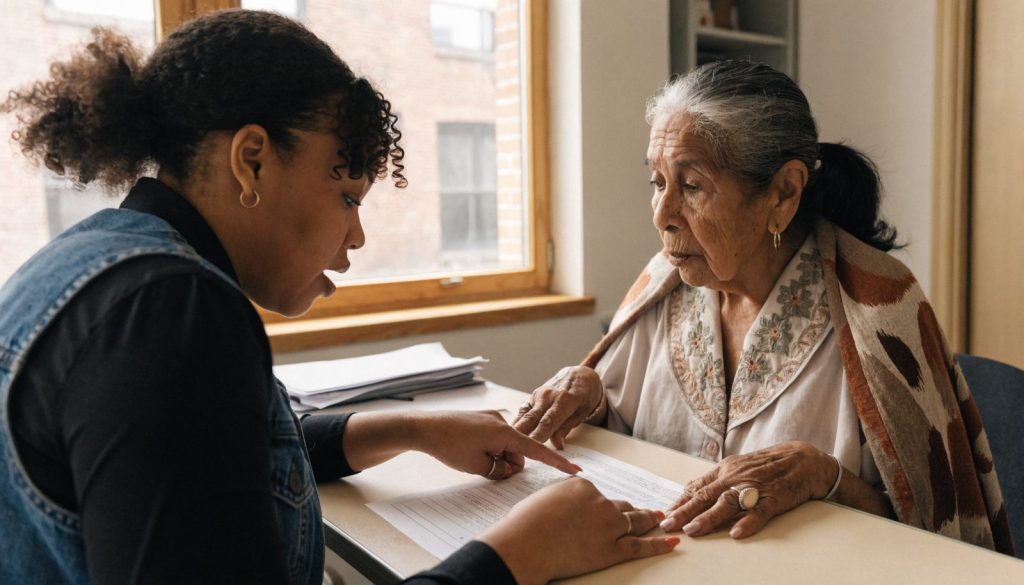
When primary care, laboratory, diagnostics, pharmacy and physical therapy sit in separate organizations, someone has to carry information between them, and that someone is usually the patient or an adult child.
Results get faxed to the wrong place. A specialist prescribes something that interacts with an existing medication. A follow-up nobody owns quietly never happens. None of that is dramatic, and all of it compounds.
Keeping those services under one roof is not about convenience so much as about who is responsible when a result comes back abnormal. The practical test when you are choosing a practice: ask who reviews your lab results and how you will hear about them. A clear answer tells you a lot.
Transportation and language, the two quiet barriers
Two things predict whether an older adult keeps up with care, and neither is clinical.
Getting there. Missed appointments are usually a transportation problem, not a motivation problem. Once someone stops driving, a practice without a transportation option effectively becomes a practice they cannot use.
Being understood. Describing symptoms in a second language costs precision, and precision is most of diagnosis. In a county where a large share of older adults are Spanish-dominant, whether the practice actually works in Spanish, at the front desk and in the exam room, changes the quality of care. We wrote about that in more detail in our piece on bilingual doctors in West Palm Beach.
When you are comparing practices, ask both questions directly. They are easier to answer honestly than "are you any good," and they tell you more.
How to choose a senior health practice locally

A short list of questions worth asking before you register anywhere.
- Do you accept my specific plan, by name, for this coming year?
- Will I see the same physician at most visits?
- Is lab work done here, or do I go somewhere else for it?
- Who reviews my results, and how will I be told?
- Is there help getting to appointments?
- Can I be seen in Spanish, at the desk as well as with the doctor?
- How quickly can I be seen when something is wrong, rather than routine?
At Cagigas Medical Centers, primary care, laboratory, diagnostics, pharmacy, wellness, physical therapy and transportation are part of the same organization, and the practice runs in English and Spanish. If you want to know whether your plan works here, the fastest answer is a phone call.
Frequently asked questions
What senior health services does Medicare cover at no cost?
Original Medicare covers an annual wellness visit and a range of preventive screenings with no cost to you. Cost sharing generally applies once a screening leads to a diagnostic test, or the visit turns into treatment for a specific problem. Booking the wellness visit as its own appointment helps keep the distinction clean.
How do I find affordable senior health care in West Palm Beach?
Start with what your plan already covers rather than with price. Confirm the practice accepts your specific plan by name for the coming year, since networks change every January. If cost is the constraint, free unbiased counseling is available from Florida SHINE at 1-800-963-5337.
How often should someone over 65 see a primary care doctor?
At least once a year for a wellness visit, and more often if you are managing a chronic condition such as diabetes or high blood pressure. Your own physician sets the interval based on your history. The value comes from the same practice tracking your numbers over time.
Do you offer services in Spanish?
Yes. Cagigas Medical Centers serves patients in English and Spanish, at the front desk as well as in the exam room. For older adults managing several conditions, being able to describe symptoms precisely in your first language makes care both safer and faster.
Is transportation available to appointments?
Yes. Transportation is one of the services offered, because missed appointments are usually a transportation problem rather than a motivation one. Ask when you schedule so it can be arranged in advance.
Looking for a senior-focused practice?
We see adults 65 and older every day, in English and Spanish, with lab, pharmacy, wellness and transportation in the same organization. Call and ask what your plan covers here.
This article is general health information, not medical advice, and does not replace a conversation with your own physician. Screening intervals vary by personal and family history. For free, unbiased help with Medicare coverage questions, contact Florida SHINE at 1-800-963-5337.